Depending on the decade you grew up in, you may have seen the MyPlate or MyPyramid diagrams in a cafeteria, homeroom, or health class when you were a kid. These diagrams were used in schools so that kids could learn what a healthy, balanced diet is, which consists of appropriate proportions of carbohydrates, protein, vegetables, fruits, and dairy. However, for some children, even today, those diets aren’t readily available at home due to food insecurity. In fact, as of 2024, 3.3 million households have both adults and children who are food insecure [1]. And as of 2024, at some point in the year, 18.3 million households were food insecure, meaning they could not access enough food for all their members [1]. Unfortunately, the level of food insecurity among Americans, as shown by statistics, is disproportionate, with higher rates among subpopulations.
In 2023 and 2024, according to the United States Department of Agriculture (USDA), non-Hispanic Blacks and Hispanics had higher food insecurity rates than non- Hispanic and white populations [1]. In the same report, regarding household composition, female-headed households with no spouse had the highest prevalence of food insecurity. In contrast, male-led households with no spouse ranked second but were distinctly lower than female-led households [1].Indigenous Americans are twice as likely to struggle with food insecurity as other racial subpopulations, especially those living on reservations, as these areas often lack the infrastructure needed to cultivate enough food or to distribute groceries cost-effectively. Unfortunately, throughout American history and continuing into the present day, racial and gender-based prejudice has contributed to some subpopulations experiencing food insecurity at higher rates than others. Black communities have historically faced discrimination in employment, housing, and access to resources, contributing to economic disparities and higher rates of food insecurity [2]. Additionally, due to discriminatory housing practices, Black populations across America are more likely to live in food deserts, areas with limited access to grocery stores and fresh, healthy foods.
Government initiatives like the Supplemental Nutrition Assistance Program [3] are designed to help low-income families access healthy food. An example of how they do this is with electronic benefits transfer (EBT) cards, which are accepted at thousands of grocery stores. However, some food-insecure households are classified as very food-insecure, meaning that the eating patterns of one or more household members are disrupted and food intake is reduced due to a lack of money or other resources [1]. One possible reason for people to be very food-insecure is that they may live in food deserts where the “closest” grocery store is miles away and inconvenient to reach. Also, even though food-insecure people can receive assistance from food pantries and donations, this may satisfy an individual’s immediate feeding needs but not meet their full nutritional needs. Some food parcels provided by food banks, for example, can be inconsistent in meeting nutritional requirements [5].
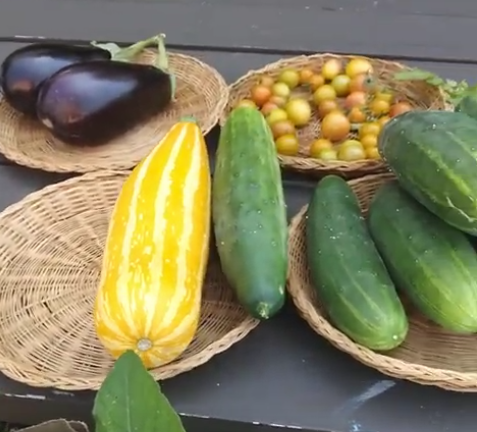
Community gardens can be a solution to multiple issues regarding food insecurity by increasing access to nutritious foods, increasing physical activity of participants, and increasing social capital [6]. While gaining full nutritious meals and physically gardening at a community garden, you may meet people that you have never seen before. That neighbor across the street that doesn’t really come outside that much, a community organization, or someone who even works for your local district, these allow community relationships to form and grow.
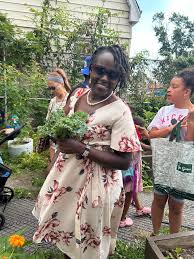
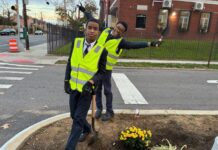
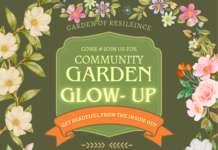
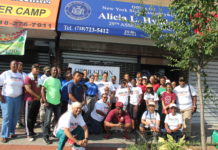
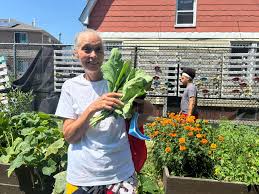
The Garden of Resilience is a place that offers all of the above! The garden was even formed by the petitions, letters, and voices of Springfield, Laurelton, and Rosedale tri-state community members, young and old, who took the initiative to reach out to local political offices to establish it. For six years, volunteers have been planting, maintaining, and harvesting free produce given to the community. This act showcases what the garden provides for South East Queens residents: power and pride. Power that was demonstrated amongst the community to actively petition for a garden in our community, determined to create a place where people who look like them, of all ages, can be self-sufficient and help their fellow brothers and sisters. Community gardens not only shape our personal and environmental health but also powerfully influence our mindsets, helping us take pride in where we come from!
References:
[1] Food Security in the U.S. – Key Statistics & Graphics. March 3rd, 2026. Economic Research Service, U.S. DEPARTMENT OF AGRICULTURE. Accessed on June 3rd, 2026. from https://www.ers.usda.gov/topics/food-nutrition-assistance/food-security-in-the-us/key-statistics-graphics
[2] Hunger hits Black communities harder. Feeding America. Accessed on June 3rd, 2026. https://www.feedingamerica.org/hunger-in-america/black-communities
[3] Supplemental Nutrition Assistance Program (SNAP). March 12th, 2026. Accessed on June 3rd, 2026 https://www.fns.usda.gov/snap/supplemental-nutrition-assistance-program
[4] Indigenous Food Sovereignty. December 19th, 2025. Lutheran Advocacy Ministry Arizona. Accessed on June 3rd, 2026. https://lamaz.org/news-blog/indigenous-food-sovergeinty
[5] Oldroyd, L., F. Eskandri, C. Pratt, and A. A. Lake. The nutritional quality of food parcels provided by food banks and the effectiveness of food banks at reducing food insecurity in developed countries: A mixed-method systematic review. Journal of Human Nutrition and Dietetics. March 8th, 2022. Accessed June 4th, 2026. https://pmc.ncbi.nlm.nih.gov/articles/PMC9790279/
[6] Sweet, C., J. Ward, H. Bonnie, S. Jarvandi. Addressing Food Insecurity: Expanding Access through Community Gardens. University of Tennessee. Accessed on June 3rd, 2026. https://utia.tennessee.edu/publications/wp-content/uploads/sites/269/2023/10/W1021D.pdf